

1. Introduction
Rare earth monosilicates (RE2SiO5) have been recognized as promising environmental barrier coating (EBC) materials due to their thermal expansion coefficient compatibility with SiC/SiC composites and excellent resistance to water vapor corrosion [1,2]. In recent years, the corrosion caused by low-melting deposits such as sand and volcanic ash, primarily composed of CaO,MgO,Al2O3, and SiO2, termed CMAS, has attracted significant attention [3,4]. High-temperature combustion environments in gas turbine engines promote reaction between RE2SiO5 and CMAS, leading to the severe degradation of the EBCs [5]. Therefore, RE2SiO5 with excellent CMAS resistance is necessary for highperformance gas turbine engines [6,7]. The vast family of rare earth elements imparts a variety of thermal and mechanical properties to RE2SiO5, but this also makes screening for suitable EBC candidates a challenging task [8]. Many researchers have investigated the interaction between CMAS and RE2SiO5 to evaluate their CMAS resistance [9-12]. However, differences in experimental conditions, CMAS infiltration depth evaluation method, and sample density often lead to misleading results, complicating the assessment of CMAS resistance. For example, Costa et al. [13] evaluated the CMAS resistance performance by characterizing the penetration depth of CMAS molten salt, while Cao et al. [14] evaluated it by measuring the thickness of the corrosion product layer. Different evaluation methods render them difficult to compare directly, and the latter does not take into account factors such as the distribution and density of the corrosion products, making it difficult to accurately identify the key factors affecting CMAS corrosion resistance. In addition, the amount of CMAS molten salt applied by different researchers varies (for example, Grant et al. [15] used 12mg/cm2, Summers et al. [16] used 18mg/cm2, and Jang et al. [17] used 40mg/cm2). Prolonged corrosion can lead to inconsistent concentrations of elements in the CMAS, and the molten salt will be consumed over time, causing the corrosion reaction to stop [18-20]. Therefore, it is essential to evaluate CMAS resistance systematically and understand how different RE species affect the degradation of RE2SiO5.
The complex high-temperature reaction processes for CMAS and RE2SiO5 can be divided into three stages. Initially, the RE2SiO5 ceramics simply dissolve into the melt. Then, once the melt is saturated in REO1.5, apatite begins to precipitate. Either the crystallization reactions consume the melt, or the residual melt eventually reaches equilibrium with the undissolved RE2SiO5 ceramics [21-23]. Therefore, the evaluation of CMAS resistance should consider both the reaction products and the dissolution of RE2SiO5 ceramics. The high-throughput method has emerged as an important tool for accelerating the preparation and analysis of the materials [24]. However, its application in the field of high-temperature corrosion has been limited due to a lack of appropriate methodologies. In this study, a high-throughput screen method was developed to investigate the interaction between CMAS and RE2SiO5 ceramics. By comparing the penetration depth of CMAS molten salt in different materials, the relative resistance of each material to CMAS corrosion can be determined. This high-throughput multilayer stacking method enables the screening of CMAS resistance in multiple samples simultaneously, thereby enhancing the efficiency and minimizing the influence of external factors, which is crucial for evaluating protective coatings in gas turbine engines. RE2SiO5(RE=Tb,Dy,Y,Er,Tm, Yb, and Lu) were selected and prepared to form multilayer stacking structures. Their degradation by CMAS was investigated at 1300∘C, and their microstructures were analyzed to identify phase boundaries. The infiltration depths of the sample after CMAS corrosion were compared to evaluate their resistance to CMAS. RE species on the resistance to CMAS corrosion was revealed based on the analysis of the results. This work provides a precise and high-throughput method for the CMAS corrosion performance evaluation of EBC and TBC.
2. Experiment
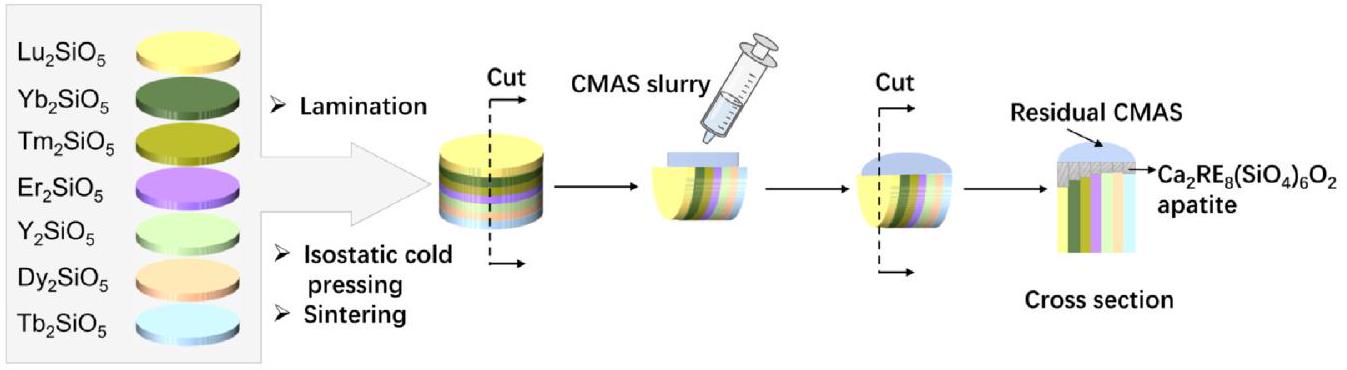
Multilayer stacking RE2SiO5 ceramics were prepared by three steps, as shown in Fig. 1. First, pure RE2SiO5(RE = Tb, Dy, Y, Er, Tm, Yb, and Lu) powder was synthesized using RE2O3 (99.99% purity; Rear-Chem. Hi-Tech. Co. Ltd., Huizhou, China) and SiO2 (99.7% purity; Sinopharm Chemical Reagent Co. Ltd., Shanghai, China) at a mole ratio of RE2O3 to SiO2 of 1:1. The powders were mixed by wet ball-milling for 12 h in a ZrO2 jar. The obtained slurry was dried at 80∘C for 12 h, then passed through an 80 -mesh sieve to obtain fine powders. Different RE2SiO5 powders were poured into a steel mold and flattened sequentially. The RE2SiO5 green body was isostatically cold pressed followed by pressureless sintering at 1550∘C for 12 h in a muffle furnace. The as-prepared ceramics were cut radially to expose different RE2SiO5 compositions. The CMAS powder used in this study had a composition of $33\mathrm{C}\mathrm{a}\mathrm{O}-9\mathrm{M}\mathrm{g}\mathrm{O}-13{\mathrm{A}\mathrm{l}\mathrm{O}}_{3/2}-45{\mathrm{S}\mathrm{i}\mathrm{O}}_{2}$ (C33M9A13S45, in molar percent of single cation oxide formula units). The CMAS powder preparation process was described in our previous work. The powder was mixed with ethyl alcohol and uniformly applied to the surface of the samples. After several cycles of drying and coating, a CMAS loading of 30mg/cm2 was achieved. The samples were then heated to 1300∘C for 20 h to promote the interaction of CMAS and RE2SiO5 ceramics. The surface morphology and reaction products were characterized by a scanning electron microscope (SEM; SIGMA 300, ZEISS, Germany) with energydispersive X-ray spectrometry (EDS) and X-ray diffractometer (PANalytical Empyrean, Almero, the Netherlands). Cross-sections of the samples were polished until seldom scratches were observed.
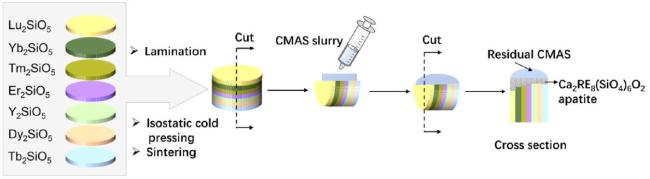
Fig. 1. Schematic diagram of high-throughput screening of CMAS corrosion-resistant RE2SiO5 by the multilayer stacking method. |
3. Results and discussion
Fig. 2 shows the multilayer RE2SiO5 ceramics prepared by the stacking method. The RE2SiO5 ceramics are well bonded without cracks. The materials are relatively dense, with no significant pores or defects. The distribution of rare earth elements is uniform, and no interdiffusion occurs at phase boundaries. Fig. 3 exhibits the interface between different RE2SiO5 ceramics. From the EDS line scanning analysis, it is evident that the RE2SiO5 ceramics with different compositions have clear phase boundaries. The multilayer RE2SiO5 ceramics were prepared by pure RE2SiO5 powders, which leads to the diffusion between different RE2SiO5 layers being relatively difficult. The successful preparation of dense multilayer RE2SiO5 ceramics lays the foundation for subsequent CMAS corrosion tests.
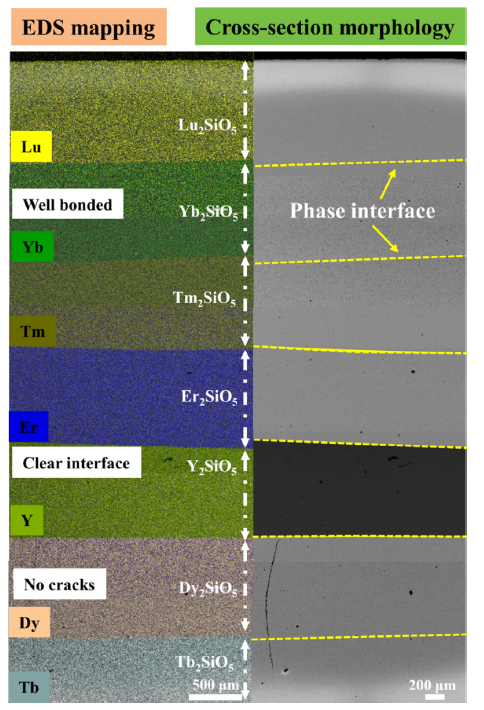
Fig. 2. EDS mapping and morphology of multilayer stacking RE2SiO5 ceramics. |
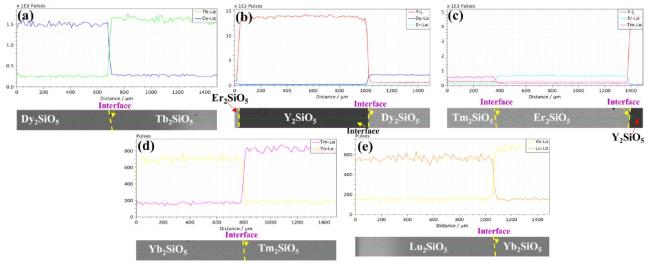
Fig. 3. EDS line scanning of multilayer stacking RE2SiO5 ceramics. |
The multilayer stacking RE2SiO5 ceramics were subjected to CMAS corrosion at 1300∘C. After corrosion, the surface morphologies of different multilayer samples are shown in Fig. 4(a-g). It is observed that RE2SiO5 ceramics with larger rare earth ionic radii, such as Tb2SiO5, are covered with short-rod-like corrosion products. As the ionic radius decreases, the amount of corrosion products decreases, and more residual CMAS are present on the surface. Er2SiO5, with a moderate ionic radius, is the dividing point for the transformation of corrosion products. The surfaces of Tm2SiO5 and Yb2SiO5 with smaller ionic radii are primarily covered with several long-rod corrosion products and a lot of CMAS. In contrast, Lu2SiO5 shows heavy CMAS coverage on its surface. These observations suggest that rare earth silicates with larger ionic radii react more intensely with CMAS, leading to the rapid precipitation of corrosion products and restricted space for product growth, resulting in short-rod structures. With smaller rare earth ionic radii, the reaction between CMAS and RE2SiO5 becomes less aggressive, resulting in slower precipitation and wider space for product growth, forming longer and thinner structures. The RE2SiO5 ceramics with the smallest ionic radii show a more inert reaction with CMAS, with fewer corrosion products and more residual CMAS salt remaining on the surface.
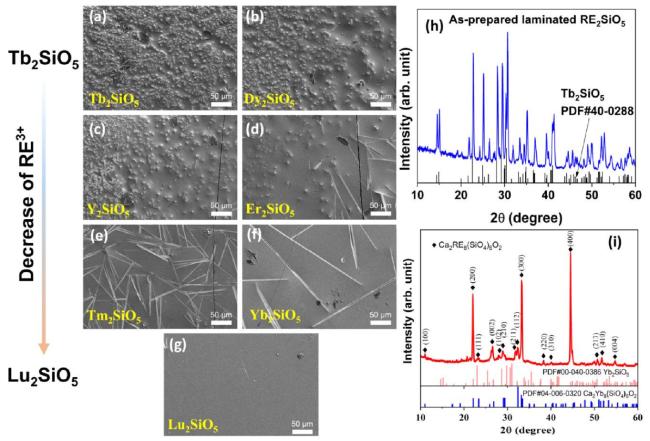
Fig. 4. (a)-(g) Surface microstructure of multilayer stacking RE2SiO5 after CMAS corrosion at 1300∘C for 20 h, (h) and (i) XRD patterns of as-prepared and after CMAS corrosion of multilayer stacking RE2SiO5. |
Fig. 4 (h) and (i) show the XRD diffraction patterns of the multilayer stacking rare earth silicate ceramics before and after CMAS corrosion. Before corrosion, the material primarily consisted of rare-earth silicates, with few impurities. After corrosion, a significant amount of the corrosion product, Ca2RE8(SiO4)6O2, in the form of an apatite phase, was observed on the surface. Strong diffraction peaks at (200), (300), and (400) indicate that the corrosion product exhibits a certain oriented distribution on the sample surface. Upon observing the surface morphology of the sample, it is evident that the corrosion products exposed the ends of rod-like structures, which is the main cause of the enhanced diffraction peaks. Costa et al. [13] measured the formation enthalpy of the corrosion products and found that the apatite phase with a larger ionic radius had a lower formation enthalpy, making it easier to form. This led to the observation of different corrosion product morphologies on the surfaces of rare-earth silicate ceramics with varying compositions. Although the as-prepared RE2SiO5 ceramics contain trace amounts of RE2Si2O7 impurities, during the 1300∘C molten salt corrosion process, RE2Si2O7 impurities dissolve into the molten salt. Upon reaching saturation, corrosion products precipitate out. Consequently, the low impurity content and similar corrosion behavior result in a negligible impact on the corrosion process.
To evaluate the CMAS corrosion resistance of rare earth silicates, the cross-sectional morphology of the multilayer stacking rare earth silicate ceramics was further analyzed, as shown in Fig. 5. From Fig. 5(a), it can be observed that as the rare earth ionic radius decreases from left to right, the thickness of the corrosion product layer also decreases. Cracks appear in the Y2SiO5 region. The thermal stress can be calculated by the following equation [25]:
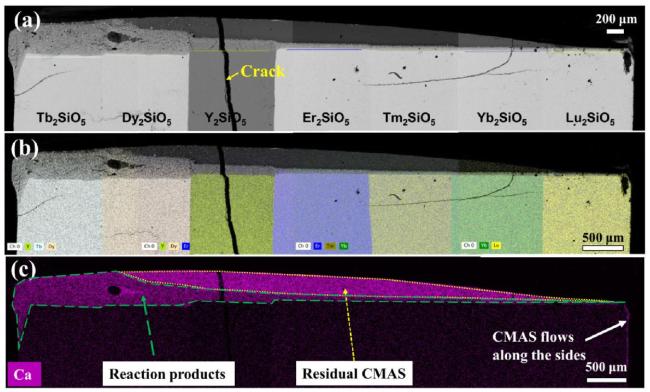
Fig. 5. (a) Cross-section image, (b) distribution of RE, and (c) distribution of Ca of multilayer stacking RE2SiO5 after CMAS corrosion at 1300∘C for 20 h. |
where σ is the thermal stress, E is the Young's modulus of the material, α is the coefficient of linear thermal expansion, and ΔT is the temperature change. The thermal expansion coefficients and the Young's moduli of RE2SiO5 ceramics are similar [26]. After CMAS corrosion, reaction products Ca2RE8(SiO4)6O2 will precipitate from the CMAS, and they increase the Young's modulus of the molten salt, generating significant thermal stress during cooling and causing material cracking. Tb2SiO5 and Dy2SiO5 exhibit more vigorous corrosion reactions with CMAS, producing large amounts of corrosion products. However, as the rare earth ion radius decreases, the corrosion products are significantly reduced. The thermal stress on the left side of the multi-layered RE2SiO5 is significantly greater than on the right side, leading to crack formation at the Y2SiO5 with an intermediate RE ionic radius. Furthermore, the distribution of CMAS molten salt on the sample surface shows a clear tendency. The CMAS is more concentrated on the side of the rare earth silicate with a larger ionic radius. The stronger the reactivity, the more CMAS molten salt tends to accumulate. It is important to note that in this experiment, a larger amount of CMAS molten salt was coated on the sample, ensuring that the corrosion reaction will not stop due to salt consumption. From Fig. 5(b), it is evident that even after prolonged corrosion, there is still a clear interface between different rare earth silicate components, with no diffusion between the samples. Fig. 5(c) shows the distribution of Ca, which allows the determination of the CMAS infiltration depth. In the current evaluation of CMAS corrosion resistance, the penetration depth of CMAS is typically used as the indicator. Conventional methods require preserving the uncorroded baseline of the sample and measuring the distance from the uncorroded surface to the deepest point of corrosion to assess CMAS resistance. Other methods measure the thickness of the reaction layer, but these methods have large errors. In this study, the rare earth silicate with the minimal penetration depth was used as a benchmark, allowing the comparison of CMAS corrosion layers' penetration depths to evaluate the CMAS corrosion resistance of different rare earth silicate ceramics.
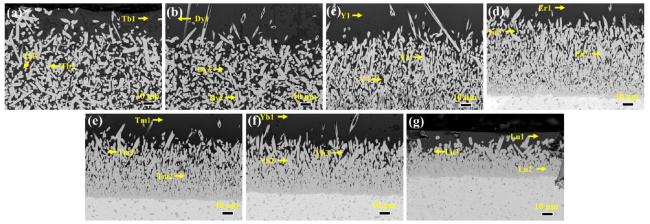
Fig. 6 Cross-section image of the reaction front of (a) Tb2SiO5, (b) Dy2SiO5, (c) Y2SiO5, (d) Er2SiO5, (e) Tm2SiO5, (f) Yb2SiO5, and (g) Lu2SiO5 after CMAS corrosion at 1300∘C for 20 h. |
Fig. 6 presents the morphology of the reaction front of different RE2SiO5 ceramics. Unlike the corrosion products in the surface CMAS molten salt, those at the reaction front consist of densely packed, short rod-shaped grains. The residual CMAS exhibits high fluidity and ample space, creating an environment conducive to corrosion product growth. This leads to distinct morphologies of corrosion products across different regions. Furthermore, Table S1 presents the elemental compositions of the residual CMAS and corrosion products. The residual CMAS contains approximately 13at% calcium, indicating that the CMAS in this experiment was not fully consumed. As shown in Table S1, the rare earth element content in the residual CMAS on top of different rare earth silicates exhibits a trend of first decreasing and then increasing. Rare earth silicates with larger RE ion radii react vigorously with CMAS, leading to substantial depletion of rare earth elements in the residual CMAS. Conversely, rare earth silicates with smaller RE ion radii produce fewer corrosion products but retain large amounts of undeposited rare earth elements in the residual CMAS. This explains why Lu2SiO5, despite yielding the least corrosion products, does not exhibit the shallowest CMAS penetration depth. Er2SiO5 exhibits intermediate corrosion product levels, yet contains the least Er in the residual CMAS molten salt, demonstrating superior resistance to CMAS corrosion.
Fig. 7 compares the CMAS resistance of different RE2SiO5 ceramics. Er2SiO5 demonstrates excellent resistance to CMAS corrosion. Tm2SiO5, which has a similar ionic radius to Er, also exhibits low CMAS penetration depth. Although Y2SiO5 produces more corrosion products, its penetration depth is similar to that of Lu2SiO5 and Yb2SiO5, both of which exhibit deeper CMAS penetration than Er2SiO5. CMAS penetration is deepest in Tb2SiO5 and Dy2SiO5, with a significant amount of corrosion products generated. Thus, it can be concluded that the CMAS corrosion resistance of rare earth silicates cannot be evaluated solely based on the quantity of corrosion products or the thickness of the reaction layer. Although the rare earth ion radii of Y and Er are similar, Y differs from other rare earth elements in that it lacks a 4 f electron shell. This may cause it to deviate from the general rule that smaller rare earth ion radii result in weaker CMAS corrosion reactions. Cross-sections of the samples (Fig. 6) also reveal that, at the same magnification, Y2SiO5 exhibits significantly more corrosion products than Er2SiO5. This difference in corrosion reaction intensity may explain why, despite similar ionic radii, they demonstrate distinct resistance to CMAS corrosion.
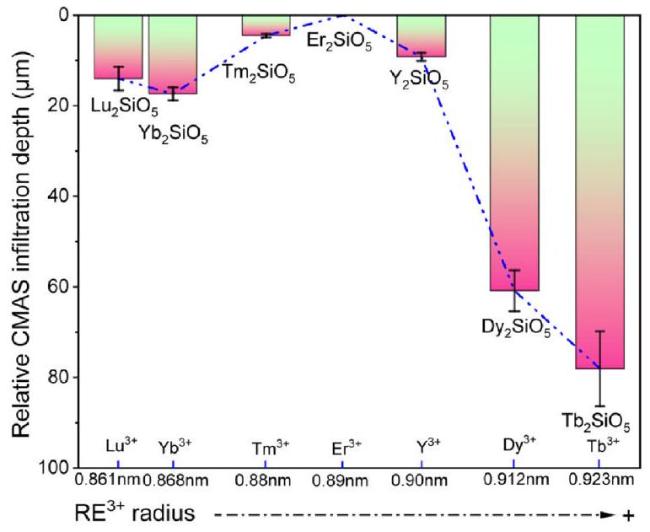


Fig. 7. Comparison of CMAS resistance of RE2SiO5(RE=Tb,Dy,Y,Er,Tm, Yb, and Lu) after CMAS corrosion at 1300∘C for 20 h. |
CMAS reacts vigorously with rare earth silicates having larger ion radii, consuming a significant amount of rare earth silicates and resulting in deeper corrosion depths. In contrast, rare earth silicates with smaller ion radii primarily dissolve in CMAS. Due to the lower enthalpy of formation of corrosion products, the reaction is relatively mild, resulting in fewer Ca2RE8(SiO4)6O2 grains. Er2SiO5, which has an intermediate ion radius, both dissolves in CMAS and precipitates a small amount of Ca2RE8(SiO4)6O2. The synergistic effect of these two mechanisms results in the shallowest CMAS penetration depth, demonstrating excellent resistance to CMAS corrosion. Therefore, the evaluation of CMAS corrosion resistance of RE2SiO5 needs a comprehensive consideration of the formation ability of corrosion products, dissolution of RE2SiO5, and the penetration of CMAS. This study provides an efficient, high-throughput method for accurately evaluating the CMAS corrosion resistance of rare earth silicates. The method quickly and efficiently assesses material corrosion resistance and reveals the impact of rare earth elements on corrosion performance.
4. Conclusions
In summary, this study developed a high-throughput multilayer stacking method for evaluating the CMAS corrosion resistance of rare-earth silicate ceramics. The method efficiently assesses the CMAS resistance of various RE2SiO5 ceramics. The reactions between CMAS and different RE2SiO5 are different. Rare earth silicates with larger ionic radii produce more corrosion products. The lower formation enthalpy of Ca2RE8(SiO4)6O2 apatite corrosion products contribute to this phenomenon. However, there is no significant correlation between the quantity of corrosion products and the infiltration depth of CMAS salts. Among the ceramics tested, Er2SiO5 exhibits superior CMAS resistance. Ceramics with smaller rare earth ionic radii produce fewer corrosion products but exhibit deeper CMAS penetration compared to Er2SiO5. The coupling of multiple mechanisms, including the formation ability of corrosion products, dissolution of RE2SiO5, and the penetration of CMAS, determines the CMAS corrosion resistance of RE2SiO5. These findings provide valuable insights into the influence of rare earth elements on CMAS resistance and offer new strategies for developing CMAS corrosion-resistant coatings for gas turbine engines.
CRediT authorship contribution statement
Liya Zheng: Writing - review & editing, Methodology, Investigation, Funding acquisition, Data curation, Conceptualization. Zhilin Tian: Writing - original draft, Validation, Resources, Investigation, Funding acquisition, Formal analysis. Keyu Ming: Formal analysis, Investigation.
Declaration of Competing Interest
The authors declare that they have no known competing financial interests or personal relationships that could have appeared to influence the work reported in this paper.