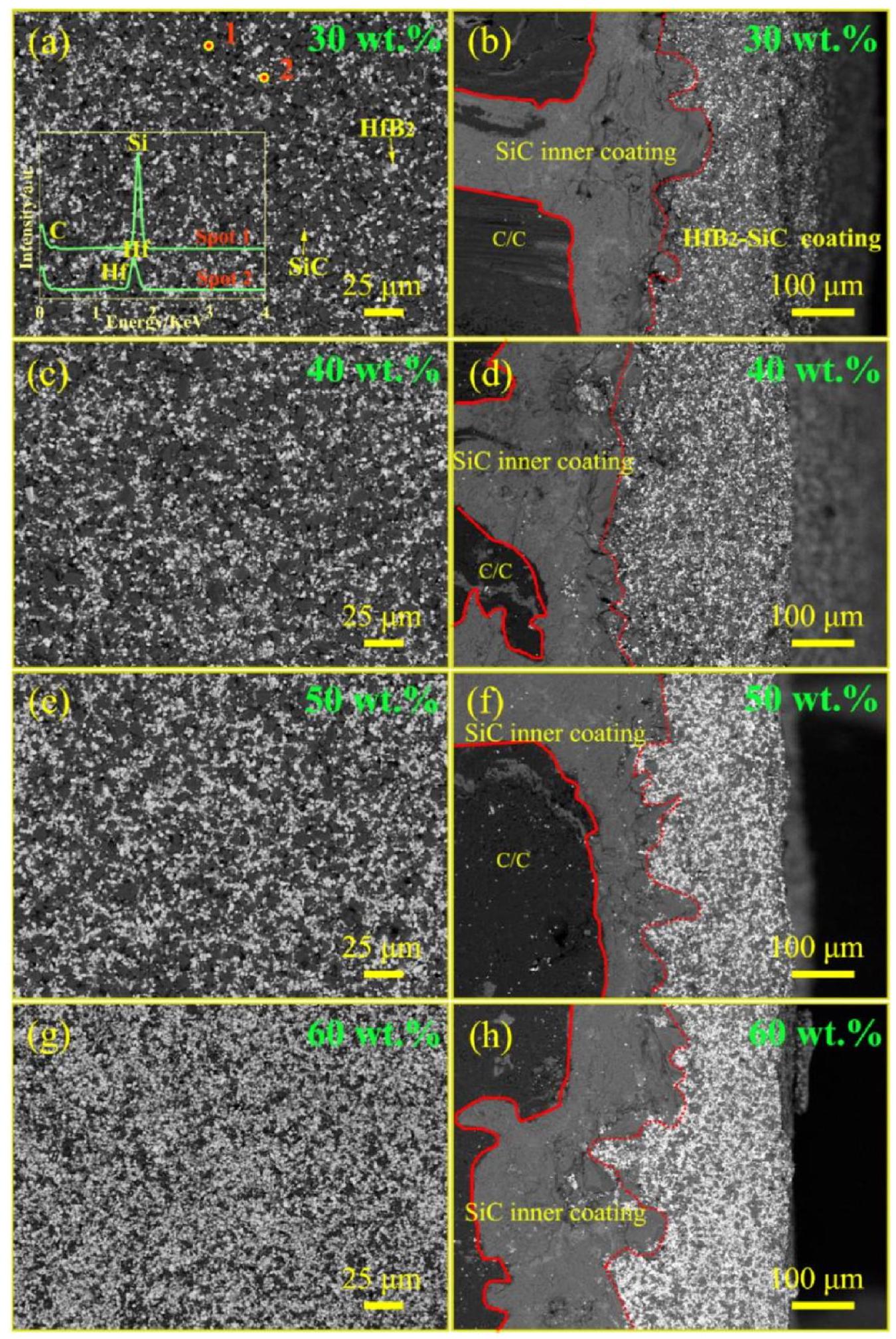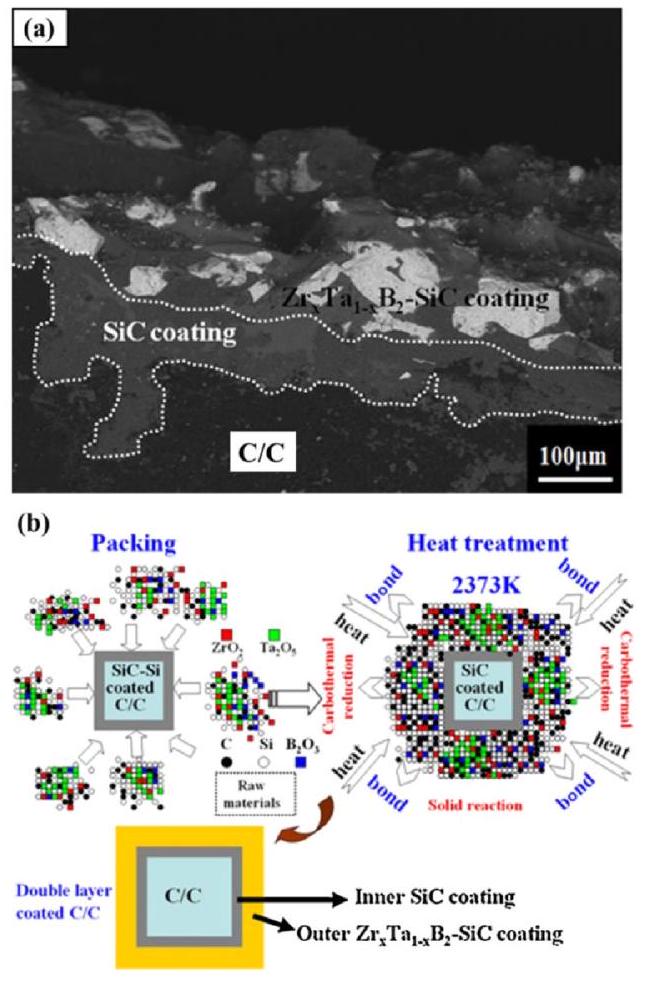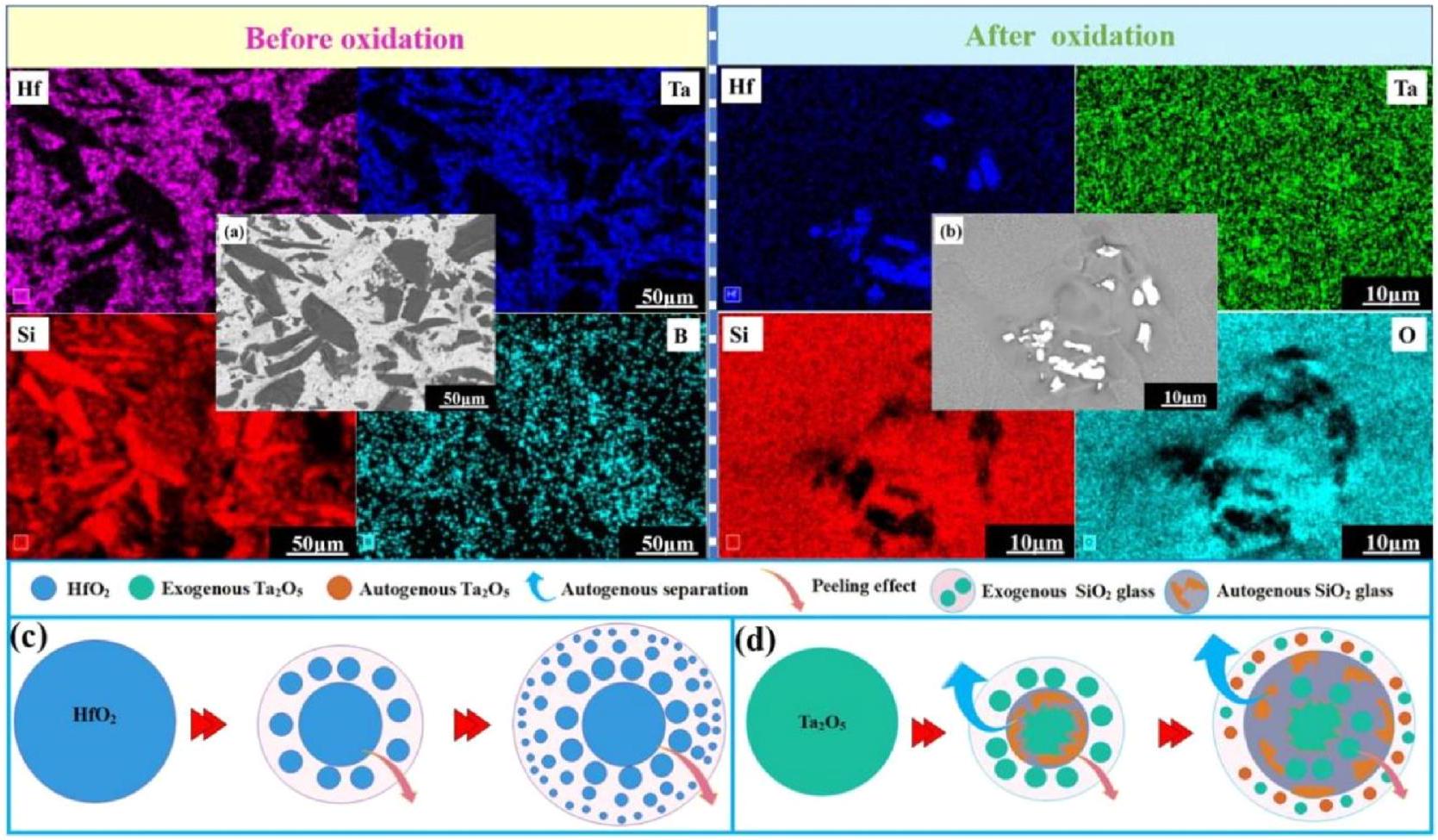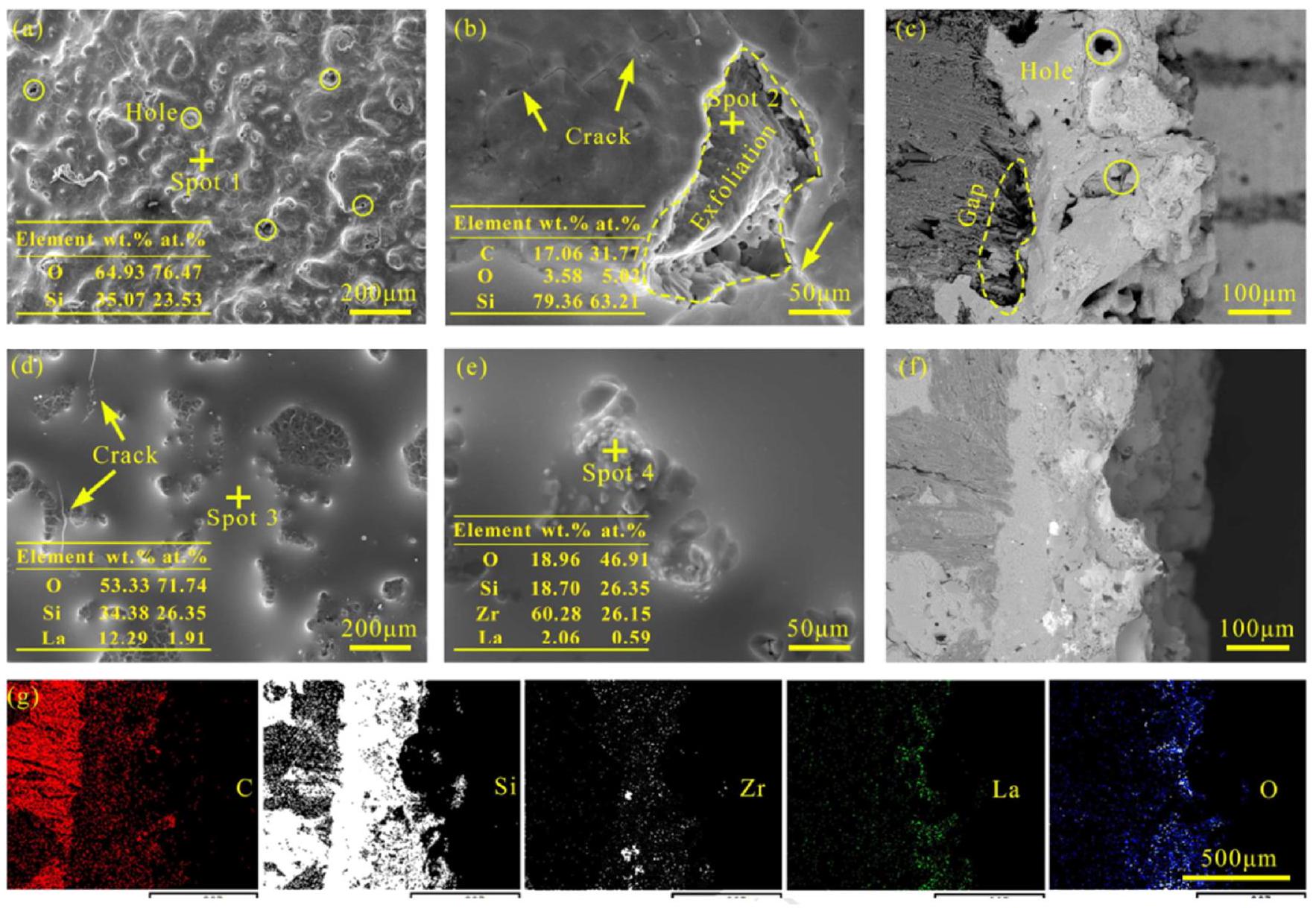
| Coating materials | Fabrication methods | Temperature ( ∘C ) | Time (h) | Mass loss (wt%) | Refs. |
|---|---|---|---|---|---|
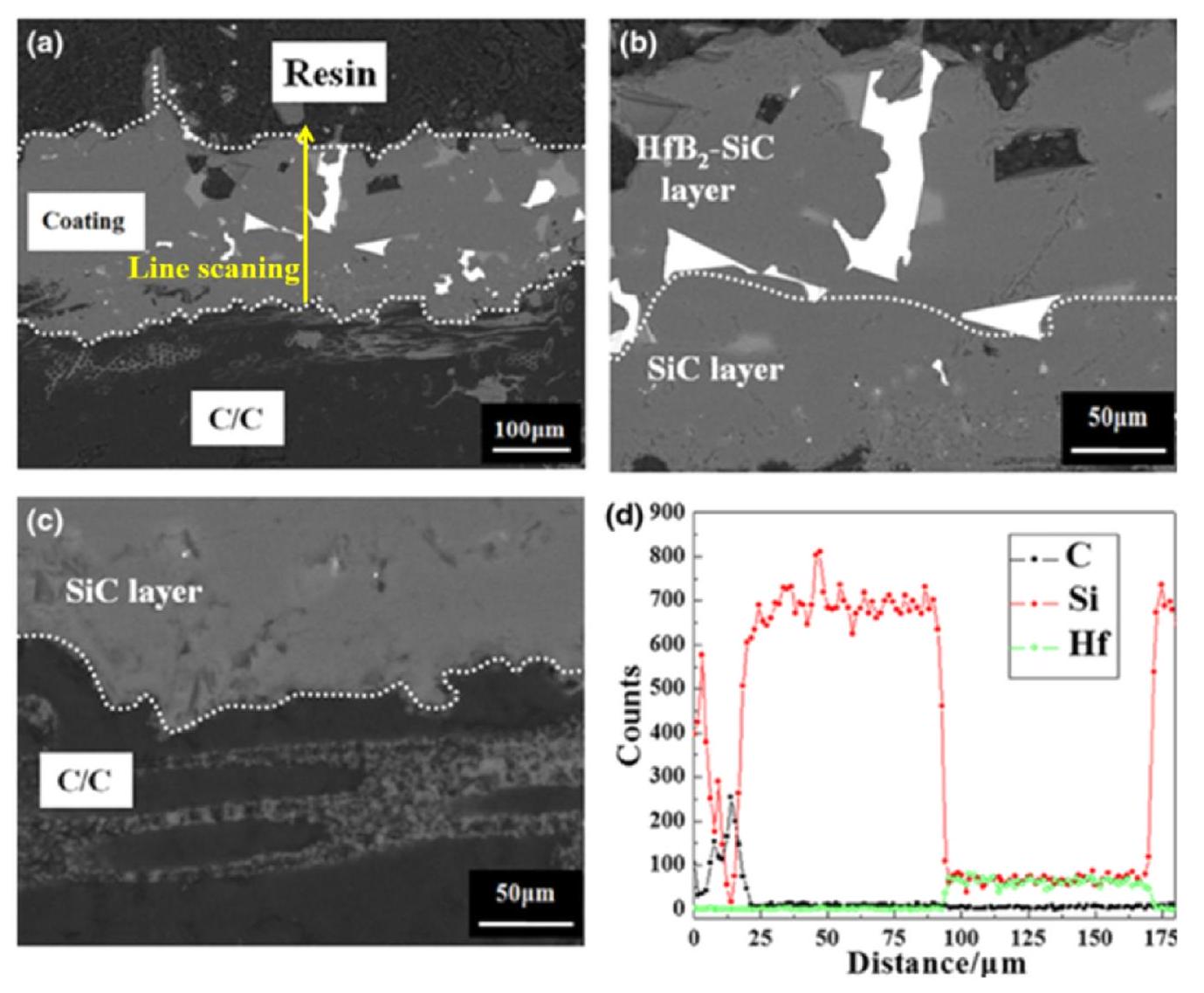
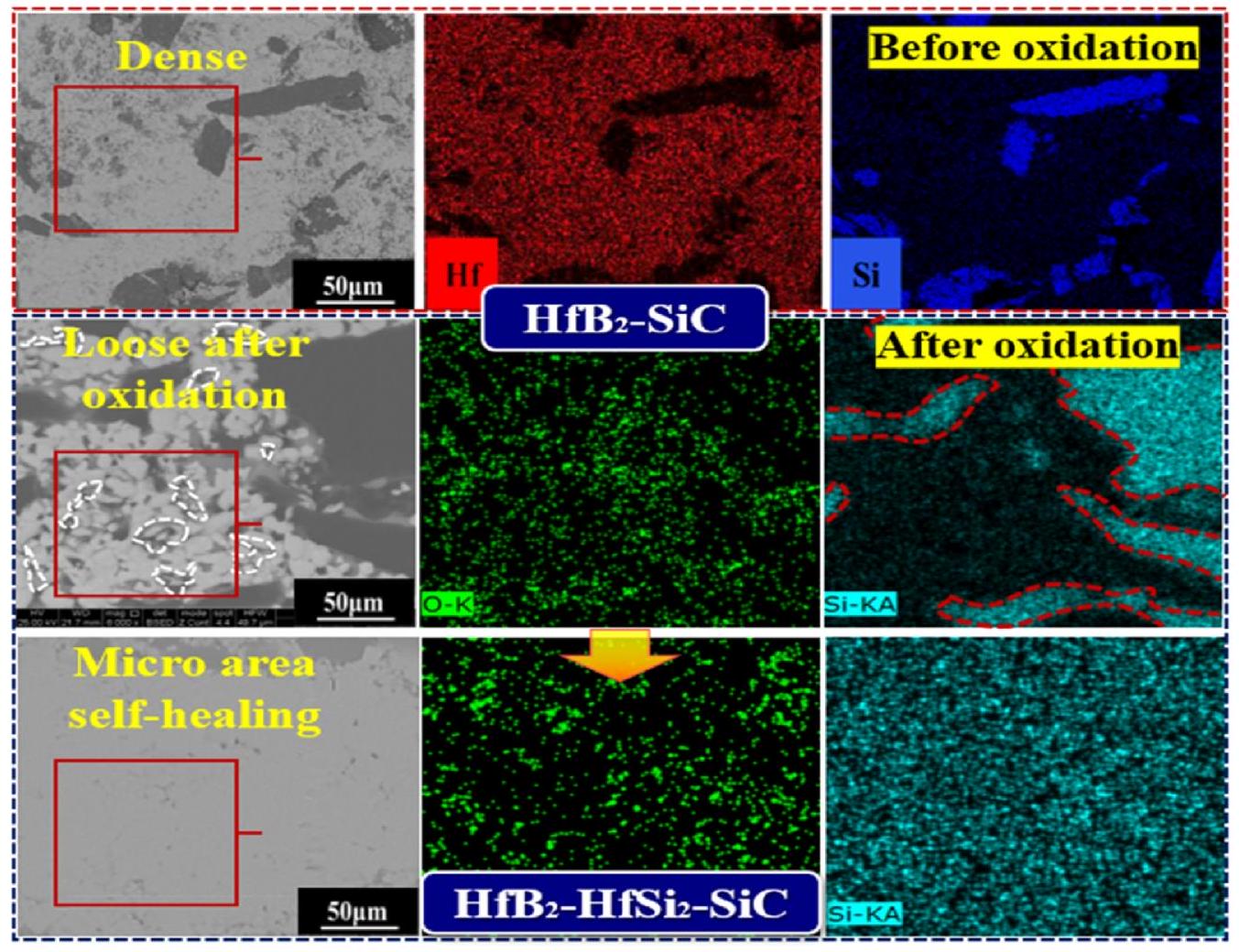
| HfB2-SiC/SiC | PCP | 1700 | 0.8 | 0.51 g/cm2 | [115] |
| HfB2-SiC-MoSi2 | LPS | 1500 | 200 | 0.08% | [121] |
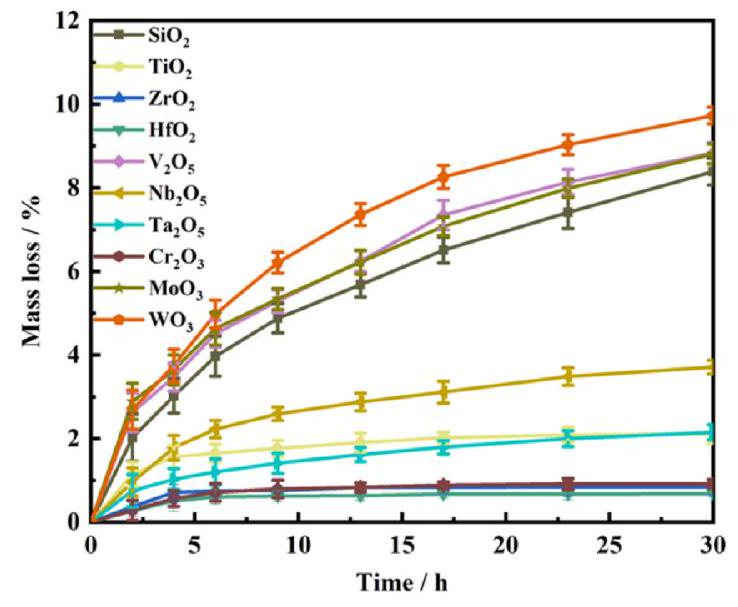
| SiO2-MexOy | CP+HT | 1700 | 30 | - | [122] |
| ZrB2-SiC-ZrC-B4C | IMP + PYR | 1500 | 200 | 1.8% | [123] |
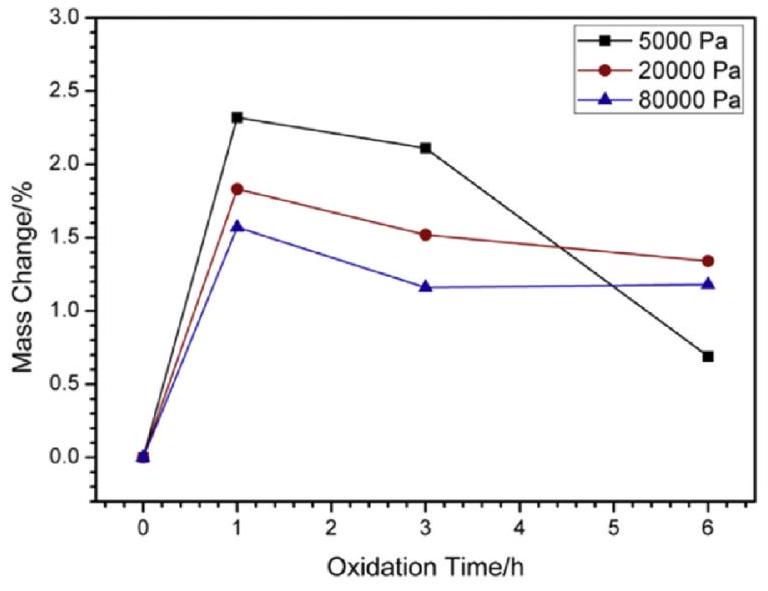
| ZrB2-SiC-ZrC | - | 1500 | 6 | 1.34 % | [124] |
| ZrB2-SiC-TaSi2 | SCC | 1700 | 0.5 | 3.81mg/cm2 | [126] |
| ZrB2-SiC-WB | LPPS | 1500 | 753 | 0.487 % | [127] |
| HfB2-SiC-MoSi2 | LFT | 1700 | - | 0.56 % | [128] |
| SiC/SiC-MoSi2-ZrB2 | 1500 | 30 | 0.3 % | [129] | |
| ZrB2-MoSi2-SiC-Si | SI+ VSI | 1600 | 150 | 0.21 % | [130] |
| ZrB2-xMoSi2-Y2O3-yAl | SCC | 1400 | 6.5 | [133] | |
| CeO2-HfB2-MoSi2-SiC | SPS | 1700 | 1.5 | 0.14 g/cm2 | [134] |
| ZrB2-SiC-La2O3/SiC | SPS | 1800 | 0.25 | 1.15mg/cm2 | [135] |
| Lu2O3-SiC-HfB2 | SPS | 1700 | 130 | 3.8mg/cm2 | [136] |
| LaB6-HfB2-SiC | LFT | 1700 | 1.5 | 0.85 g/cm2 | [137] |