| YSZ | < 1200 | ∼10.7 (matches superalloy) | Good | Mature system, tunable porosity, good oxidation resistance | Upper temp limit ∼1200∘C, poor CMAS resistance |
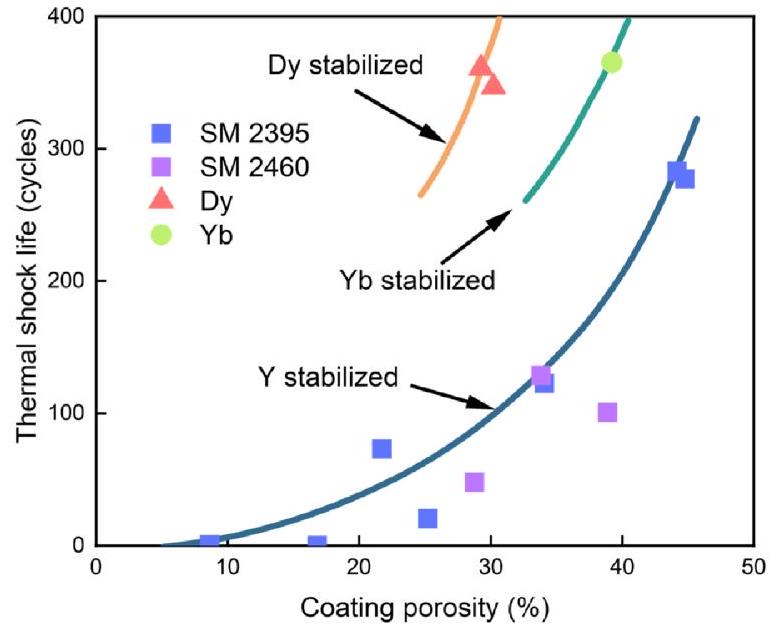
| DySZ | ~1200 | Similar to YSZ | Better than YSZ | Improved phase stability, thermal shock resistance | Higher hardness, more blade wear |
| YbSZ | ~1200 | Similar to YSZ | Better than YSZ | Good thermal stability | Limited service temperature range |
| InFeO3(ZnO)m | < 1400 | ∼11.5 | Stable up to 1400∘C | Low hardness, good abradability | Poor erosion resistance |
| LMA | < 1600 | - | Excellent | High fracture toughness, low thermal conductivity | Uneven porosity, cracking under shock |
| YAG | < 1600 | - | Excellent | Good CMAS resistance, tunable porosity (SPPS) | - |
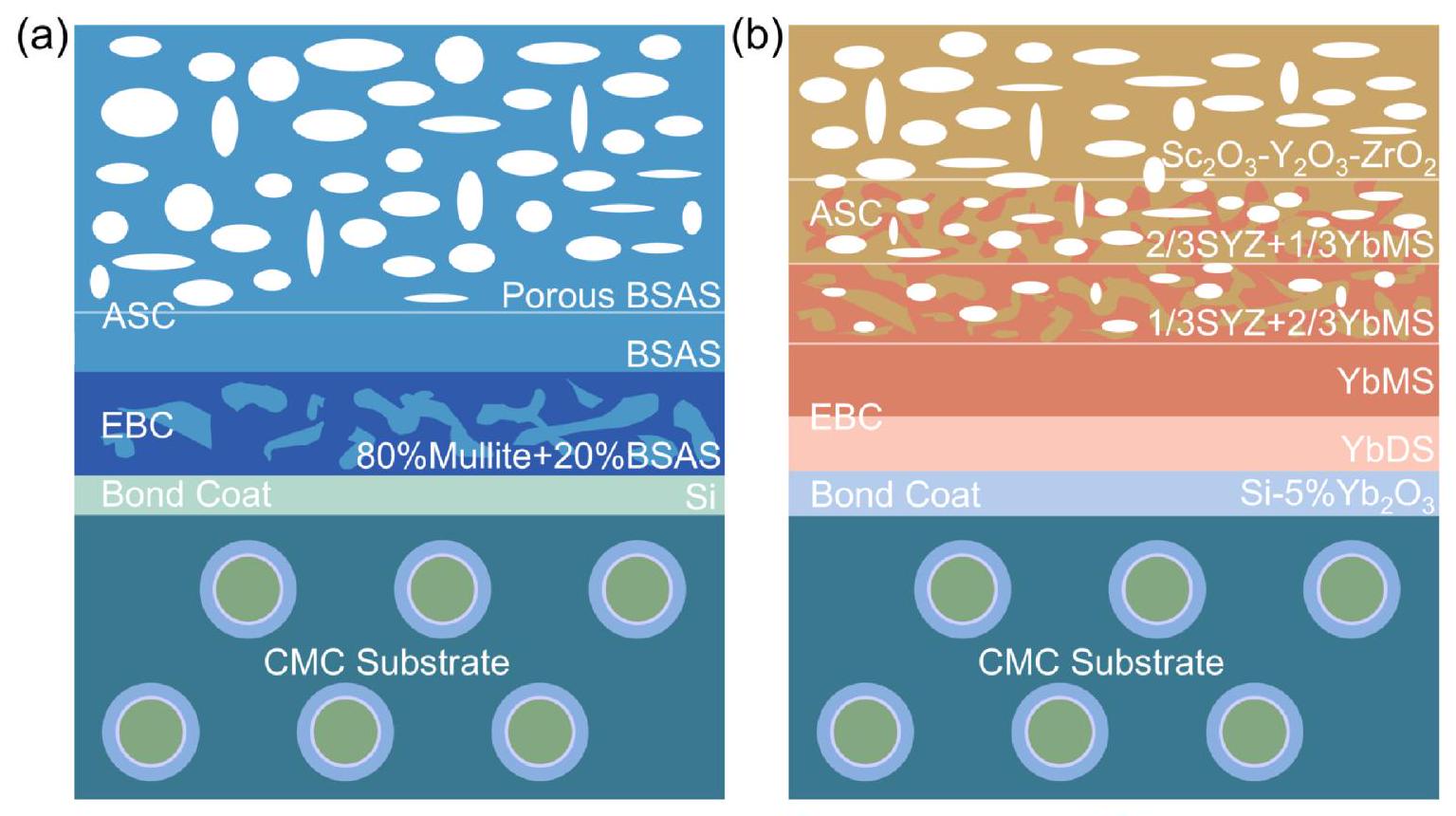
| BSAS | < 1300 | 4-6(matches CMCs) | Good | Good abradability, low silica activity | Glass phase formation at high temperature |
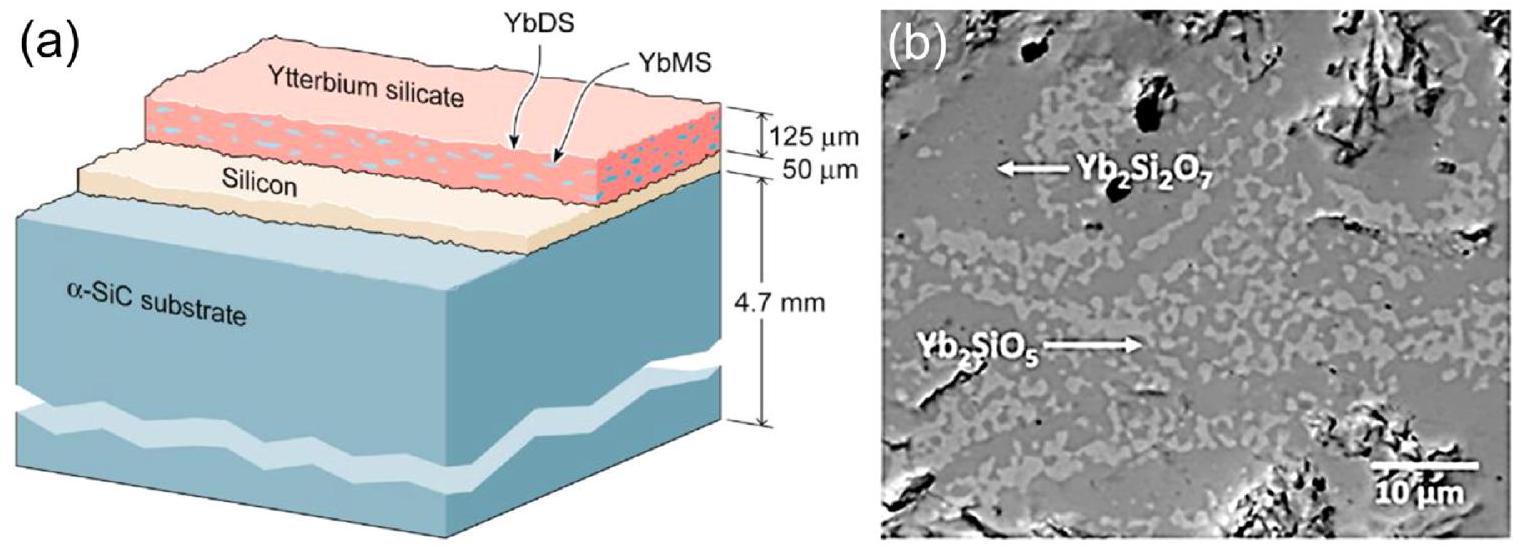
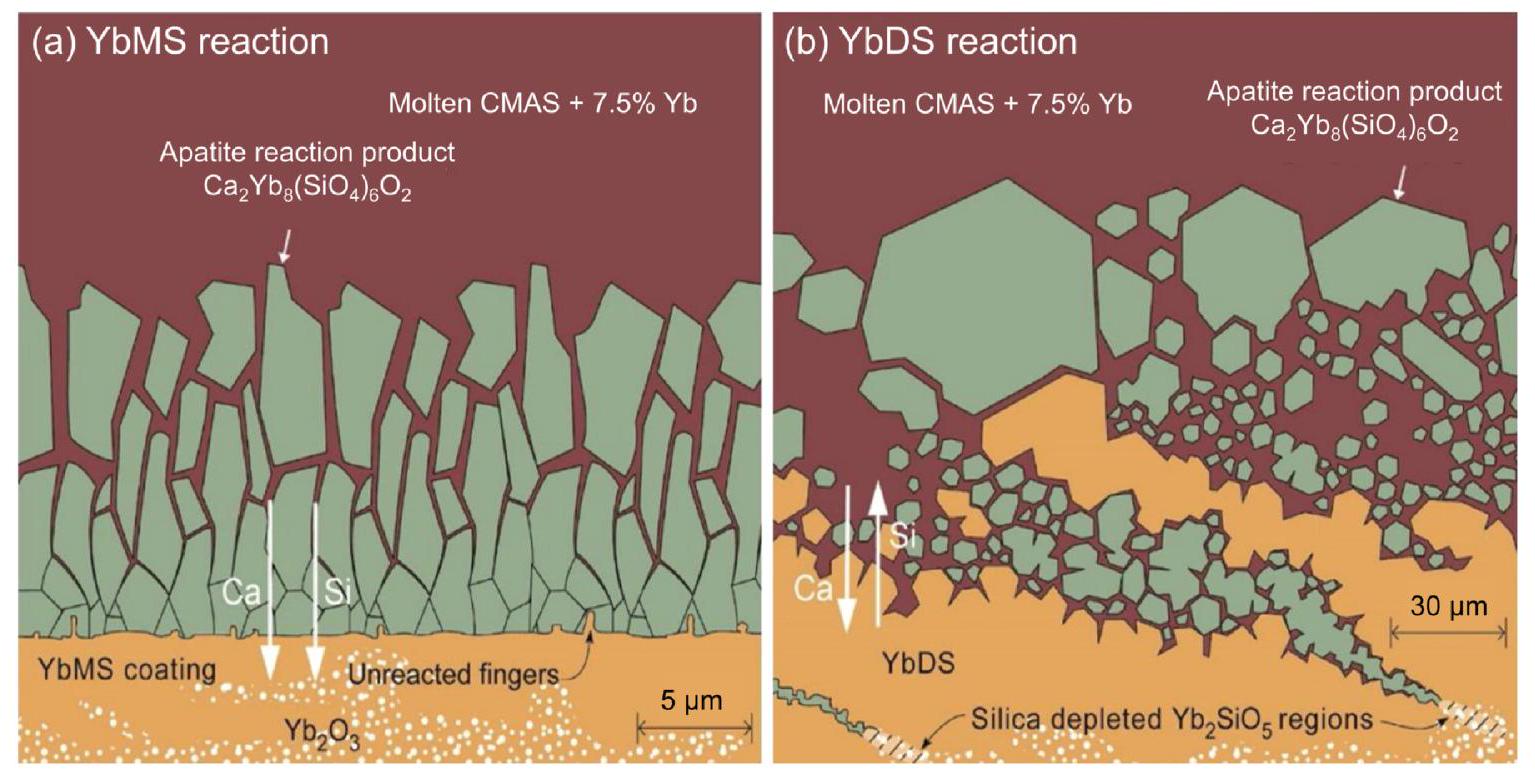
| YbMS | < 1500 | 7.5 | Excellent | Good thermal stability | CTE mismatch, interface spallation |
| YbDS | < 1400 | 4.5 | Good | Good CTE match, abradability | Poor water vapor/oxygen corrosion resistance |