| Scratch Method | Measures mass loss caused by a stylus scratching the coating under a constant load; greater mass loss indicates better abradability. | Simple and easy to implement | Significant deviation from actual service conditions |
| Scratch Hardness Method | Uses an indenter of defined shape to create scratches on the coating surface; abradability is characterized by scratch hardness related to scratch width. | Simple and easy to implement | Significant deviation from actual service conditions |
| Turning Method | A blade is used to machine a rod coated with the sealing layer at a cutting depth of 0.6 mm ; the time required to cut this depth is used to evaluate abradability. | Simple and easy to implement | Lacks heating and temperature control devices |
| Impact Wear Method | Uses an impact wear tester to measure the wear energy of the coating; lower wear energy indicates better abradability. | Introduces a quantitative evaluation standard | Far from actual service conditions; suitable only for theoretical research |
| Sliding Wear Method | Employs a ring-on-block wear tester to measure the wear rate between a metallic block and a coated block under specific conditions. | Closely simulates service conditions | Low linear velocity; still deviates from actual conditions |
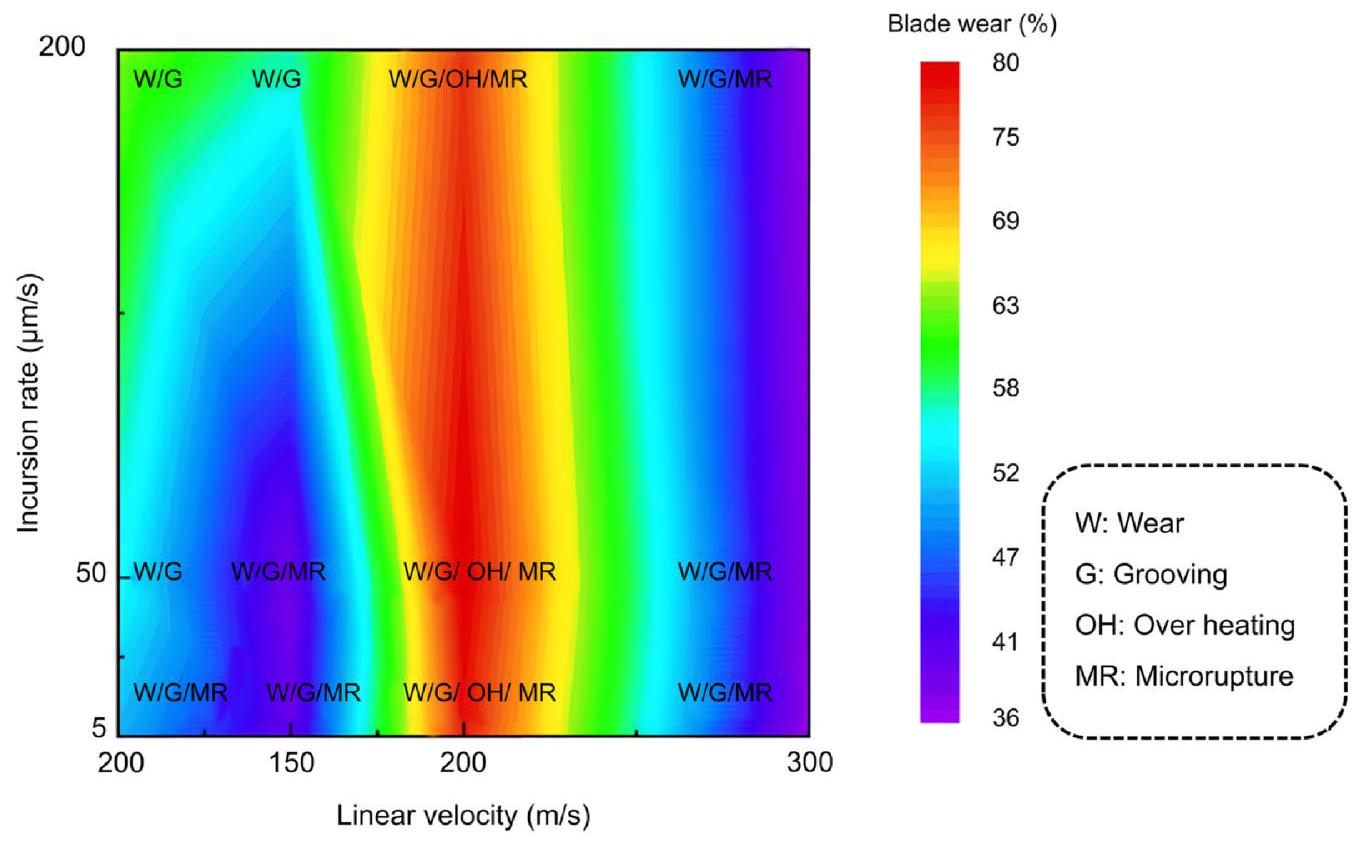
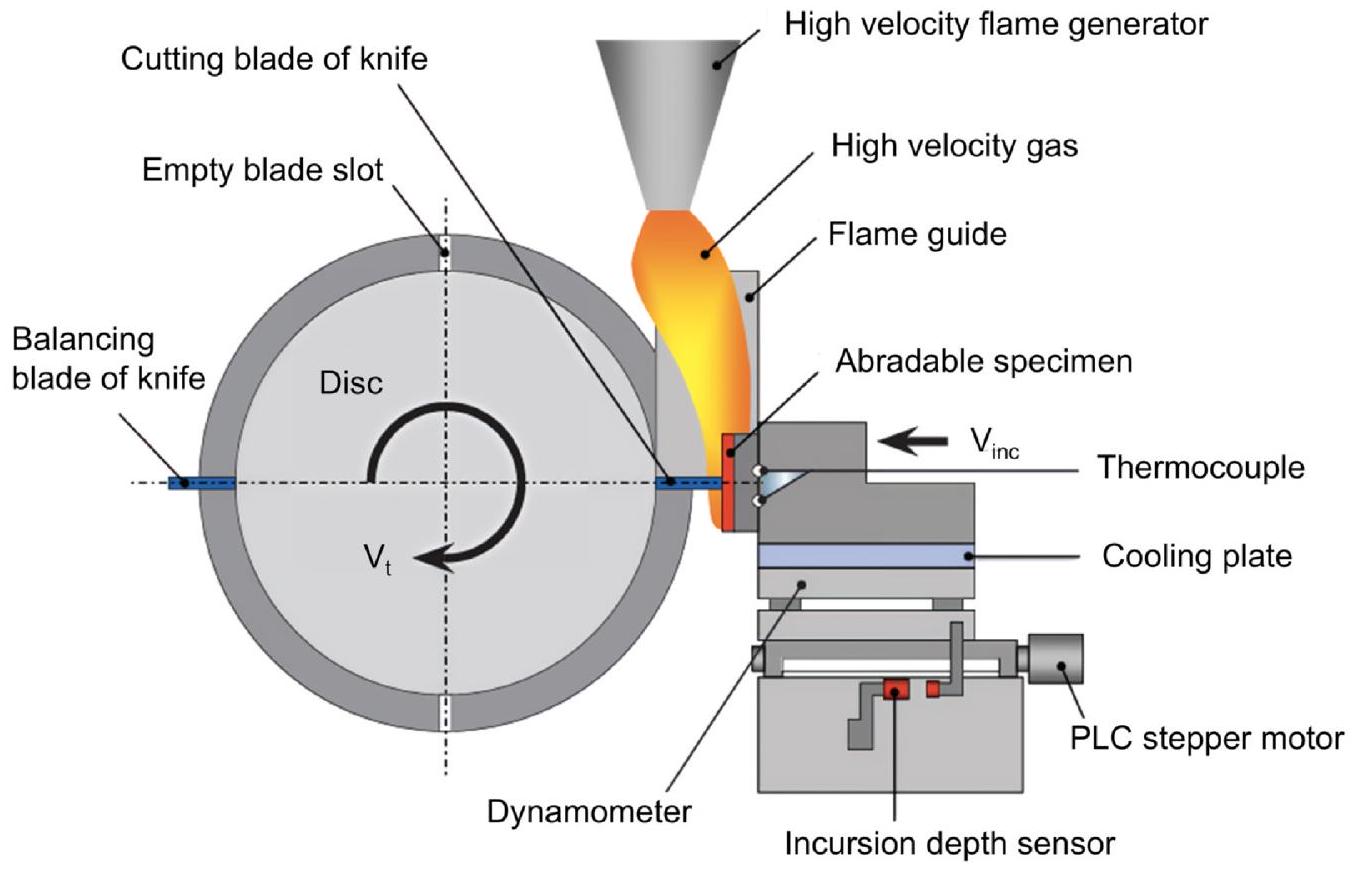
| Disc Milling Method | The sealing coating is applied to the end surface of a pin, which is then tested against a rotating disc; abradability is characterized by the measured wear rate. | Higher linear velocity ( $\leqq 150\text{ }\mathrm{m}\cdot {\text{ }\mathrm{s}}^{-1}$) | Lacks heating and temperature control; deviates from actual conditions |
| Bench Test Method | Simulates real engine operation; abradability is evaluated based on coating performance and blade condition. | Closely simulates service environment | High cost; lacks standardized evaluation criteria |